

Black-Owned Banks in Missouri
Three years ago, I said the #BankBlack movement is slowly progressing. If that's still true, I'm not seeing it. One reason why is that it's since become overwhelmingly clear that while supporting Black-owned banks and Black American-owned businesses unites us, it won't fix the fact that we make up approximately 1% of America's wealth. In short, it doesn't equate to the fight for reparations. Another reason is that one's choice of banking is an intimate one. You can oftentimes look at someone and see what brands and causes they support. How often do you see someone wearing a shirt that reads "Bank of America" or "Chase Banking?" In a society with devastating cyber threats, identity theft, and AI's role in increasing such risks, those volunteering their bank of choice are in the minorities...and/or influencer marketing.
Like Historically Black Colleges and Universities (HBCUs), there are benefits for Black Americans choosing to "Bank Black." Blacks are more likely to reach a representative who understands the financial fragility of Black America, and is more willing to teach financial literacy specific to your circumstances, because they experience them more often. Being a Black-owned bank member grants you unique resources specific to you, something you're unlikely to experience at other banks.
St Louis Community Credit Union (SLCCU) for STL Residents

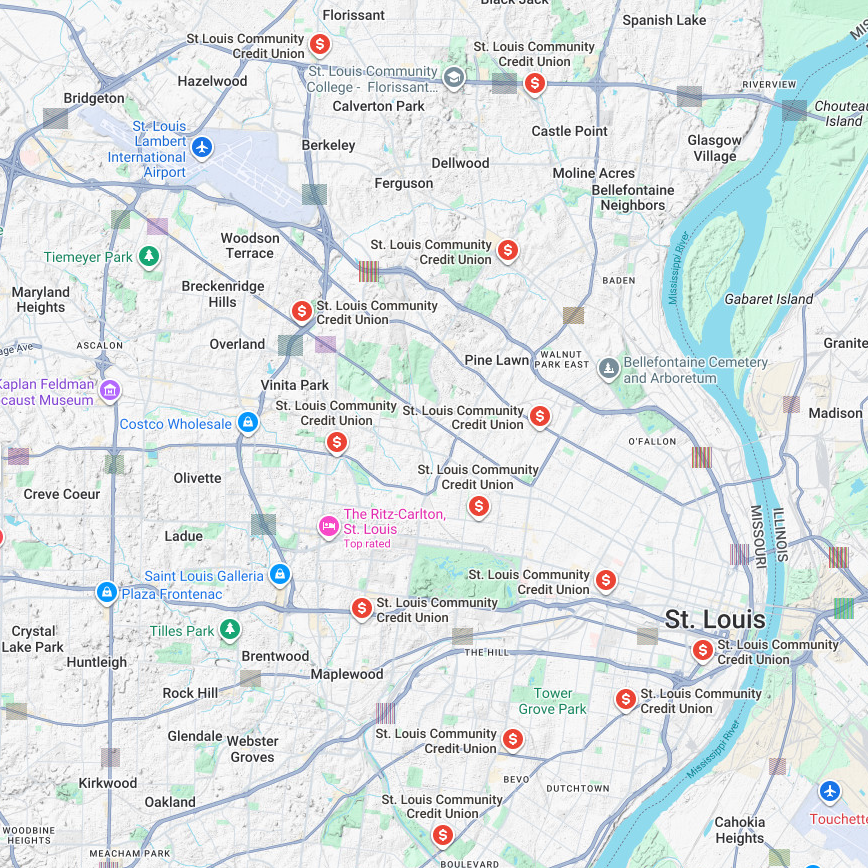
St Louis Community Credit Union (SLCCU) has been focused on minorities since it started in 1941. is not "Black-owned" in the traditional sense of having an individual business owner and CEO. SLCCU is a non-profit financial cooperative owned by its 54,000+ members. Basically, it's "member-owned," allegedly mostly by Black account holders. There's a lot of necessary details to unpack here.
St Louis Community Credit Union is a Minority Depository Institution (MDI)
St Louis Community Credit Union (SLCCU) is considered a Minority Depository Institution (MDI): a "depository institution where 51 percent or more of the stock is owned by one or more 'socially and economically disadvantaged individuals." What's a minority, though? Well, Section 308 of the Financial Institutions Reform, Recovery and Enforcement Act of 1989 ("FIRREA") defines "minority" as "Black American, Asian American, Hispanic American, or Native American." In this case, "minority" is synonymous with "Black, Indigenous, and People of Color" (BIPOC). On top of that, an MDI's board of directors and target demographic must be mostly minority. So, to summarize before continuing, the MDI label:
- Requires 51% or more of the business's stock is owned by minorities
- Requires the business board of directors by mostly minority
- Is not Black American or African descent-specific
- Is not audited for proof of eligibility unless a major legal incident triggers it
That last bullet point is the critical context here: eligibility for the MDI label is not required to be proved or audited. SLCCU and other third-party organizations support the claim. Photos of the senior management, board of directors, and supervisory committee members show a majority-Black crew. But there's no data providing evidence that it's truly majority Black member-owned, and they're not legally required to give any.
In 2012, SLCCU acquired the Gateway National Bank — Black-owned for most of its 47 years open — and converted it to a branch minutes west of O'Fallon park.
Is SLCCU Worth Joining?
The STL Community Credit Union has some advantages:
- Branches in over a dozen locations throughout St Louis city and county
- Free financial literacy webinars
- Profits are reinvested into loans and services instead of external shareholders
- Members vote on board members
- Boasts its mission to assist minorities
Its disadvantages:
- Not traditionally Black-owned, instead spreading accountability across the entire leadership team and member base (via votes for board members)
- May depend on partnerships with other organizations to grant loans
- Branches only in St Louis
- No business checking or savings accounts
Black-led and transparently focusing on helping Black is the closest Black St Louis residents have to a Black-owned bank. No other bank on this list has branches in the greater St Louis area. But there's more context to guide your decision. Historically Black Colleges & Universities (HBCUs) aren't Black-owned at all. HBCUs are either publicly owned by state government or private non-profits governed by a board of trustees. To take it a step further, sometimes Black people support popular non-Black owned businesses just for showing Black faces, knowing it's performative.
Like SLCCU, HBCUs are likely to have white board members. Mine do and I'm still a proud HBCU Alumnus. That doesn't automatically signal that the organization is white-washed or unfocused on helping Black Americans. That's why I spent so long explaining how SLCCU is Black-led. Now, you can make an informed decision. The organization's online profile suggests they're sincere.
For Black STL residents who consider "Black-led" to be enough, and have no plans to move outside of the greater area, SLCCU is worth a try, a little "stress test" if you will.
- Call and email them, and note the quality of their customer service
- Visit 1–2 branches and do a vibe check
- Ask them to compare their offerings to what your current bank offers
- Check social media, Google, Yelp, etc. for reviews
This is a short checklist you should apply to every bank you research. It's your money. Make an informed decision on where you're storing it.
If you're a Black resident in Missouri, especially St Louis, this is a viable option. If "Black-led" isn't enough for you, the next bank is "Black-owned" as in owned and run by a Black man.
Liberty Bank & Trust for Kansas City Residents and Travelers
Liberty Bank & Trust is not affiliated with the other "Liberty Banks" throughout the country. When researching Black-owned Liberty Bank & Trust, ensure you're searching for libertybank.net.
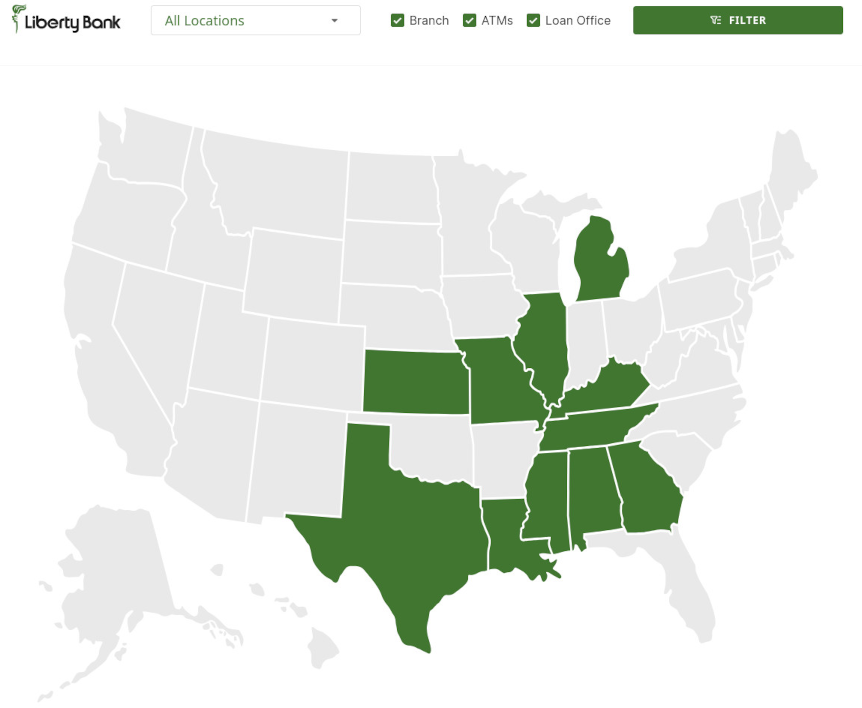
Liberty Bank & Trust is mostly central to New Orleans, Louisiana, where it first started in 1972. However, there is a Liberty bank branch in Kansas City, Missouri. The for-profit bank was founded in 1972 by CEO Alden McDonald Jr., and his son, Todd McDonald serves as president. Liberty Bank is a certified Community Development Financial Institution (CDFI), meaning they're required to focus on assisting "low-income and underserved" people. Remember, that isn't synonymous with "Black Americans," but "minorities."
Liberty Bank & Trust does have a unique product that speaks to this claim. Many banks won't loan any lower than a few thousand dollars, removing them as an option for small loans. Liberty offers loans as low as $500, negating predatory payday lenders who pile on outrageous interest fees. They intentionally target "unbankable workers," those usually denied loans by large banks. President Todd McDonald said on the record that he wants to replace loan denials with loan conditions. It's a bold idea that could have an immense ripple effect:
- Help people better stay afloat in today's unstable economy
- Teach recipients better finance skills
- Force major banks to rethink how they handle loans
- Raise the standard for how Americans choose where they bank
- Remind Americans that diversity breeds innovation and racism costs money
In Liberty Bank We Trust?
Pros for those banking with Liberty Bank & Trust:
- Traditionally Black-owned and Black-led by a Black man
- Over two dozen branches throughout the Midwest and southeast
- Clearly focused on expanding their nationwide branch coverage
- Their mobile banking solution can resolve most if not all banking needs
- Includes Business Banking (more on this later)
- Customer service seemed patient and knowledgeable when I called to ask about business banking (they didn't respond to my initial email)
- More physical branches than any other bank on this list
There's one potential con. In 2025, Todd told Forbes that he'd been working to convince Black leadership in major cities that Liberty Bank can serve everyday workers — not just Black Americans.
"The sales pitch for America to bank with us is good. You get the same services. And you grow your community." - Todd McDonald in a Forbes interview
To be clear, this isn't inherently a bad thing. Being a Black-owned bank doesn't require that they only serve Black Americans. Their goal to provide small loans with conditions to be met does benefit Black Americans more than any other racial group. Black Enterprise, World Wide Technology, and Urban One are well known Black-owned businesses in their respective industries. It would be great to have a well-known Black-owned bank accessible nationwide. It would be a milestone in the "Support Black-Owned" movement and #BankBlack initiative. It's a smart business move to ensure longevity. Relying on a single racial group – the less than 13% of the population which holds only 1% of America's wealth – and only having branches in 11 states isn't a winning move.
The quote is a yellow flag, something to watch. Their mission statement emphasizes "customer driven financial products and services to diverse markets with a focus on disadvantaged communities who have traditionally been underserved." If they provide more services that help Black Americans' disadvantaged financial status, awesome. If not, or they roll back their "loans with conditions" initiative, there's little incentive to bank with them over any non-Black-owned bank.
Black-Owned Business Banking with Liberty Bank
Liberty Bank & Trust has personal checking and business checking accounts. Below are a few things to know about their business checking product:
- They have two business checking account tiers – small business banking and corporate banking. Be sure to ask about this to determine which option best suits your needs.
- You can create a Liberty business checking account online, but the process may take a few days. If you go to a branch, it can be completed in the same day.
- You cannot create appointments to visit a branch; walk-in only.
- Their smartphone app allows mobile deposits, but it may take 2-3 days (8 in unusual cases) before it's cleared.
- ACH privileges require a corporate banking account.
- Limits are $3000/daily for point of sale (POS), $1000 for ATM withdrawals, and mobile deposit at $2000.
- Only corporate banking accounts have a relationship manager.
This can change at any time. Ask them to confirm anything I've written if you inquire about business checking.
This is one of two options on this list for Black-owned business banking. If the potential pivot from serving underserved people worries you, or you identify as Pan-African, the next bank could be your best fit.
African Diaspora Federal Credit Union (ADFCU) for Pan-Africans

African Diaspora Federal Credit Union (ADFCU) opened in Saint Ann, MO in 2025. The parent organization, African Diaspora Council (ADC), states that ADFCU will promote financial education, solutions, and investment opportunities for African entrepreneurs. The website lists their products: personal checking and savings, loans, and certificates. Otherwise, it's quite bare.
There are no official social media accounts listed, smartphone apps, leaders named, or timelines showing what they're doing to improve. They use different websites to apply for membership, log into your banking account, and submit a "Quick Loan Application," which didn't allow me to advance past the first tab. Based on available info, the leadership appears to be its parent organization's Board and Executives. Note that a white man is the Vice-President and Vice-Chairman. That's a cautionary note related to my primary issue with this bank, and the Freedmen's Bureau. But the lack of in-depth information serves as a strong reminder of this bank's infancy. Past the website, we have to talk about the differences between pro-Blackness and Pan-Africanism.
Pan-African Versus Pro-Black American
The red flag with the African Diaspora Federal Credit Union is in the name.
The "African diaspora" consists of anyone of African descent.
African diasporans pushing for everyone within the African diaspora to unite are known as "Pan-African" (e.g., Dr. Umar Johnson).
Here's the thing: "Pan-African" is not:
- Pro-Black American
- Pro-American Descendants of Slavery (ADOS)
- Pro-descendants of American Freedmen
- Pro-Foundational Black American (FBA)
It's pro-everyone of African descent, which isn't a horrible thing. But it can fool some Black Americans into believing that many people of African descent across the US, Brazil, UK, African countries, etc., are working collectively toward the same goals with an organized plan. And that's not true. There are Africans in African countries who don't get along. There are Black Africans who do not respect Black Americans as part of their community, history, or lineage. I know: "not all, not all, not all." But...it's far more than enough that native Black Americans should be cautious about claiming a continent far removed from our history and not well known for claiming us. Simply put, Pan-Africanism is a pipe dream. There's an easy example to explain this.
If Black Americans want to make a difference on a global or national scale, we must start local first, internally and politically. That means starting with reparations from chattel slavery in the United States of America, and equality, not equity, in money, healthcare, housing, education, etc. The fight for equality doesn't look the same for Black Americans as:
- Black South Africans from Apartheid
- Black Haitians' reparations from the French
- Black Brazilians against the Brazilian government
Black Americans have been burned countless times by mixing with "Black and brown coalitions" and "working-class unions," only to be left with nothing. Martin Luther King Jr., Malcolm X, and the Black Panther Party taught us that in various ways. Furthermore, the US uses Black Africans to displace Black Americans while artificially lumping them into our numbers. Before we focus on such ambitious goals, we need to fix ourselves.
None of that is to say that Black Africans are by default our enemies or don't experience racism. I'm not accusing ADFCU of attempting to siphon money from Black Americans. I am saying these are things worth considering when deciding to work with a financial institution targeting the Pan-African community. Their mission doesn't focus on Black Americans, but splits between serving Black Africans, whatever that might mean.
The next bank is a complete 180 from pro-African diaspora to unapologetically pro-Black American, but there are reasons it's mentioned last.
OneUnited Bank for Purely Online Banking

OneUnited Bank gets an honorable mention because it boasts its digital banking solutions, mitigating the needs to visit a physical branch. That's one reason it's on this list. Its closest branch to Missouri is in Florida. OneUnited Bank is owned by Chairman and CEO Kevin Cohee, interestingly from Kansas City, MO. Like Liberty Bank & Trust, OneUnited offers business banking, but you must visit a physical branch to open an account.
Some claim that OneUnited is the biggest Black-owned bank, but there's nothing to prove that. It is undoubtedly the best marketed Black-owned bank. The Breakfast Club radio show interviewed Owner and CEO Cohee years ago. They have a decent finance blog. Cherie Johnson who played Maxine on Family Matters did some influencer marketing for the bank on social media years back. If you look up "Black-owned bank," you're very likely to see OneUnited content.
Remember, good marketing does not equal good quality. Years ago, I provided solutions to help Black-owned business owners negate the stigma against having poor customer service. Neither IT nor AI solutions replace personable, quality customer service skills. When I emailed OneUnited asking what can and can't be done online versus at a branch, along with other questions, unlike Liberty, they did respond. The response was very inadequate, though. When I asked for a fuller response, they ignored me. So although they're hiring "customer care agents" in Miami and Los Angeles, their customer service department is apparently untrained, undermanned, a window into the OneUnited work culture, or a combination of them.
Is it Beneficial to Join a Black-Owned Bank in Missouri?
Whether you're pro-Black, pan-African, or a business owner trying to join the #BankBlack movement, it's slim pickings for the Black Missouri resident. SLCCU is convenient for STL residents but they don't have business checking. Liberty Bank has a branch in Kansas City, but that's a non-starter for STL folks who demand expedience. ADFCU is simply too new. And OneUnited has great marketing but mixed reviews.
| Bank Comparison | SLCCU | Liberty | ADFCU | OneUnited |
|---|---|---|---|---|
| Email Customer Service | TBD | ❌ | TBD | 🟨 |
| Phone Customer Service | TBD | ✅ | TBD | TBD |
| St Louis Branch | ✅ | ❌ | ✅ | ❌ |
| Kansas City Branch | ❌ | ✅ | ❌ | ❌ |
| Plentiful Reviews | ✅ | ✅ | ❌ | ✅ |
| Social Media Updates | ✅ | ✅ | ❌ | ✅ |
| Business Checking | ❌ | ✅ | ❌ | ✅ |
This chart is based on my research as of July 2026. Your experience with customer service may vary. Products and services may change. I may not do a good job of keeping this blog post updated.
The Black-owned banks may give Black long-term Missouri residents the best return on investment in finances. Representatives will be more empathic to your financial literacy, willing to educate you, and more welcoming (not merely tolerant). With a Black-owned bank, you can get great customer service, personalized financial advice that doesn't ignore race-specific challenges, and access to a community of like-minded Black Americans. It's worth contacting at least one bank to see how they compare against your current banking institution.
If you're in St. Louis, start with SLCCU. If you're in Kansas City, call Liberty. If you only need digital banking, contact OneUnited. If none of them fit, use the checklist above to find a bank better suited for your needs.